
Therapy Dog Training: How to Prepare Your Dog for Therapy Animal Work
Published:
Therapy dog training takes more than knowing basic cues.
Therapy dogs may visit hospitals, schools, assisted living communities, workplaces, and public spaces. They may see new people, hear new sounds, and come across things they have never seen before.
Training can help you and your dog get ready for these experiences.
At Pet Partners, we believe therapy animal work starts with a strong bond between you and your dog. Training can help your dog build important skills while staying happy, comfortable, and safe.
Therapy dog training helps your dog get ready for visits in the community. This includes things like responding to basic cues, meeting new people, visiting new places, and learning to stay calm around distractions.
You have an important role, too. A Pet Partners therapy animal team includes one handler and one animal. You and your dog are equal partners and you work together to make each visit safe and positive.
Basic training gives your dog an important starting point for therapy animal work. Your dog should be able to follow common cues and stay calm around people and other animals.
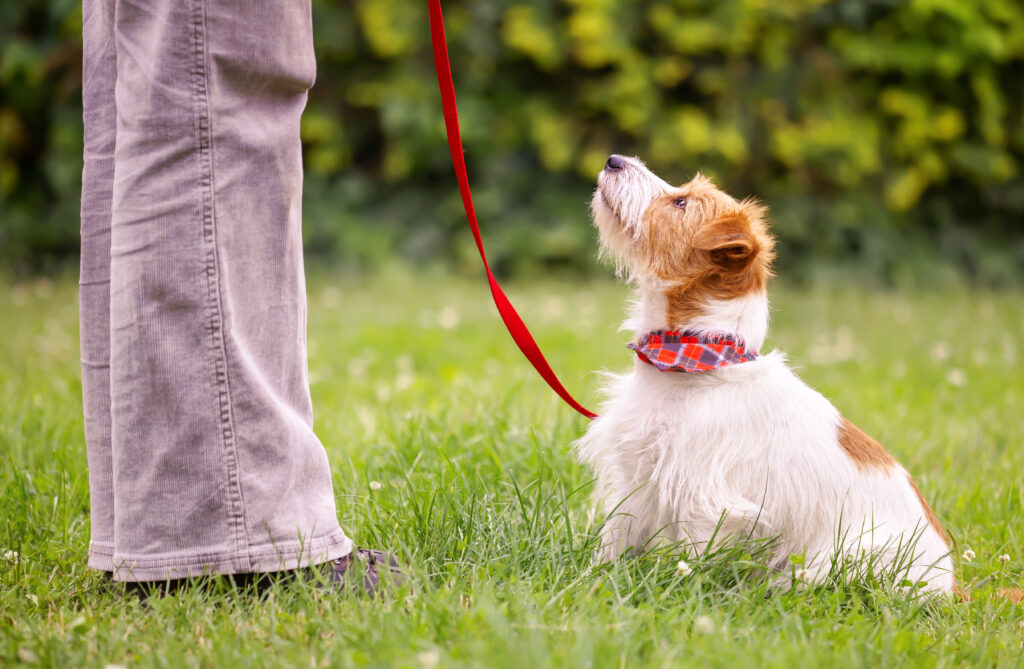
Pet Partners recommends that dogs know skills such as sit, down, stay, leave it, and walking calmly with their handler.
Your dog does not need to be perfect. Therapy dogs just need good manners and basic skills that help people feel safe and comfortable around them.
A dog can be very well trained and still feel stressed during therapy animal visits. Therapy dog training should also help you learn what your dog enjoys, what makes them uncomfortable, and how they handle new situations, and how best to support them.
Your job as a handler is about more than giving your dog cues. You also need to watch how your dog feels during each interaction.
Stay close to your dog: watch for signs that they are happy, worried, tired, or ready for a break. Help them feel safe when something new happens.
The more you learn to understand each other during training, the more prepared you will be for your visits together.
Before focusing on specific skills, consider whether your dog actually enjoys the kind of social interaction involved in therapy animal work.
One of the most important qualities in a potential therapy animal is genuine interest in meeting people.
A dog should do more than tolerate attention from strangers. Ideally, that dog enjoys interacting with people of different ages and backgrounds and finds those experiences rewarding.
Think about how your dog behaves when someone new approaches. Do they willingly engage? Remain relaxed when being petted? Recover easily if something unexpected happens?
Those observations can tell you a lot about whether therapy animal work may be enjoyable for your dog.
Every dog has individual preferences. One dog may love children but feel uncertain around large groups. Another may be comfortable in a quiet assisted living community but become overwhelmed in a busy school hallway.
Knowing your dog well is an important part of therapy dog training. Pet Partners encourages handlers to understand how their animals communicate excitement, discomfort, fatigue, and readiness to leave. That knowledge will help you anticipate how your animal may respond during visits.
Your dog’s comfort should help guide the kinds of environments and interactions you pursue together.
Once you know your dog enjoys social interaction, you can focus on building the everyday skills that create a strong foundation for therapy animal work.
Reliable basic skills can make unfamiliar environments easier to navigate. Practice cues like sit, down, stay, leave it, and walking calmly with you.
Rather than focusing only on whether your dog completes the behavior, pay attention to how comfortably they can respond when distractions are present. For example, asking your dog to sit in your living room may be easy. Asking for the same behavior while someone walks by, a shopping cart rolls past, or food is nearby requires additional practice.
Dogs that have learned a skill in one place may not automatically do it somewhere else. A behavior that happens reliably at home may happen very differently, or not at all, in a new location.
Gradually practice in different places and around different levels of activity. Start with environments where your dog feels comfortable, then slowly introduce additional distractions. Places like large home improvement stores can be a great place to practice if the staff approve of it.
Keep those experiences positive and brief. Training is most effective when your dog is able to stay engaged rather than becoming overwhelmed.
Socialization continues well beyond puppyhood. For a potential therapy dog, thoughtful exposure to different people, environments, and experiences can be especially valuable.
Therapy animal visits may involve children, older adults, people who move or communicate differently, and people wearing clothing or equipment your dog does not see every day.
Positive exposure to a variety of people can help your dog become more comfortable with those differences. Allow them to approach interactions at a comfortable pace. Socialization should create confidence, not force your dog into situations that cause fear or stress.
Hospitals, schools, and assisted living communities can contain unfamiliar sights, sounds, smells, and equipment. Pet Partners notes that therapy animals may encounter environments outside their normal comfort zone, so being able to recover from surprises and adjust to new situations is important.
You might gradually introduce your dog to elevators, automatic doors, unusual flooring, carts, wheelchairs, walkers, loud noises, or busy public spaces.
The goal is not to expose your dog to everything at once. Give them opportunities to experience new things while staying relaxed and supported.
Pay close attention to body language throughout these experiences. If your dog seems uncertain, create more distance, lower the level of difficulty, or take a break.
A successful socialization experience may last only a few minutes. Short, positive experiences can build confidence over time.
How you train matters as much as what you train.
Pet Partners supports positive, force-free training that builds trust between animals and handlers. Therapy animal welfare should remain the priority throughout preparation and visiting.
Positive reinforcement means rewarding behaviors you want your dog to repeat.
Depending on your dog, that reward might be food, praise, affection, play, or another experience they enjoy.
Reward calm behavior, attention, appropriate greetings, recovery after distractions, and other skills that will help your dog succeed.
Therapy animal work depends heavily on trust.
Dogs need to know that their handlers will support them when situations become unfamiliar or challenging. Training approaches that create fear or anxiety can undermine that trust.
Positive training helps create a partnership in which your dog can communicate with you and feel confident that you will respond appropriately.
Therapy dogs may interact with people who pet differently than family members or friends.
Someone may move slowly, reach from an unexpected direction, or have difficulty controlling their movements. Thoughtfully preparing your dog can help them become more comfortable with different types of touch.
Gradually help your dog become comfortable with appropriate handling of areas like their ears, paws, tail, and body.
Observe your dog’s response throughout the process. Comfortable acceptance matters more than simply tolerating handling. Your dog should also have opportunities to move away or take a break when needed.
Regular grooming can support both health and comfort.
Help your dog become comfortable with brushing, nail care, bathing, and other routine grooming. If they regularly visit a professional groomer, positive experiences there can also contribute to greater comfort with handling.
As your dog’s skills grow, start to practice situations that resemble what you might encounter during therapy animal visits.
You may encounter walkers, wheelchairs, carts, food, loud voices, sudden movements, or unfamiliar equipment.
Introduce distractions gradually and practice maintaining calm, comfortable behavior around them.
Your dog should also be able to recover if something unexpected happens. Pet Partners emphasizes that while therapy animals may be startled by unfamiliar experiences, they should generally be able to calm down and adjust.
Pet Partners encourages proactive handling, meaning you as the handler anticipate potential challenges and help set your animal up for success before a problem occurs.
That skill becomes especially important during visits, when your attention may be divided between your dog, the people you are visiting, and the environment around you.
You may want to practice walking past food without investigating it, settling beside you while people move nearby, or remaining connected with you in a busier environment.
Consider the kinds of visits that might suit your dog’s personality.
A dog that enjoys sitting quietly with one person may thrive during reading visits or one-on-one interactions. If your dog is more outgoing , then they may enjoy settings where there are several people to meet.
Your dog’s preferences should help shape where and how you volunteer.
As mentioned earlier, longer training sessions are not necessarily better.
Short, consistent practice can help your dog stay engaged and make learning enjoyable. You may accomplish more with several brief sessions throughout the week than with one long session that causes frustration or fatigue.
Learning to recognize when your dog needs rest is an important handler skill.
Watch for changes in body language, decreased interest, frustration, or other signals that your dog may need space.
That same awareness will become important during therapy animal visits. Pet Partners teaches that handlers should understand their animal’s individual stress signals and be prepared to end or pause a visit when the animal communicates that need.
Preparing for therapy animal work involves developing your own skills as a handler.
The better you understand your dog’s communication, the better you can support them.
Pay attention to posture, facial expressions, movement, attention, and other changes that may indicate comfort or stress. Knowing your dog’s normal behavior makes it easier to recognize subtle changes when you enter a new environment.
Pet Partners teaches handlers that You Are Your Animal’s Best Advocate (YAYABA™).
That means making decisions based on your animal’s needs, even when those needs differ from what you originally hoped to do. If your dog is uncomfortable around children, for example, another volunteer environment may be a better choice.
Advocating for your dog builds trust and helps create safer, more enjoyable interactions for everyone.
Progress is about more than perfect obedience.
Continue checking in with your dog throughout the training process. Enthusiasm, willingness to engage, relaxed body language, and a strong connection with you can all help indicate that you are moving in the right direction.
Training your dog is just one part of preparing to become a therapy animal team.
If you’re hoping to volunteer with your pet with Pet Partners, the process also includes completing the Pet Partners Handler Course, completing an animal health screening, participating in a team evaluation, and submitting the required registration materials.
And training does not end once you become registered. Continue practicing, learning about your dog, and strengthening your partnership as you gain experience visiting together.
If therapy animal work seems like a good fit for you and your dog, Pet Partners can help you understand what comes next.
Ready to begin your journey? Learn more about becoming a Pet Partners therapy animal team and discover how you and your dog can make a meaningful difference together.