
Infection Prevention for Therapy Animal Visits: Prepare to Visit With Confidence
Published:

Therapy animal visits can create real moments that matter, but only when they’re handled responsibly. As a volunteer, you help protect the health and well-being of your animal and everyone you meet.
Infection prevention is an important part of that responsibility. Germs can move through shared spaces in many ways, including contact with people, animals, equipment, and nearby surfaces. Some people who take part in therapy animal visits may also face a greater risk of becoming seriously ill.
The recently relaunched Pet Partners Infection Prevention and Therapy Animal Visits Course helps you understand these risks and prepare to make thoughtful choices. The course is designed for people who are considering therapy animal volunteering and for current volunteers who want to strengthen their skills.
This course is made possible through the support of the Baxter Foundation.
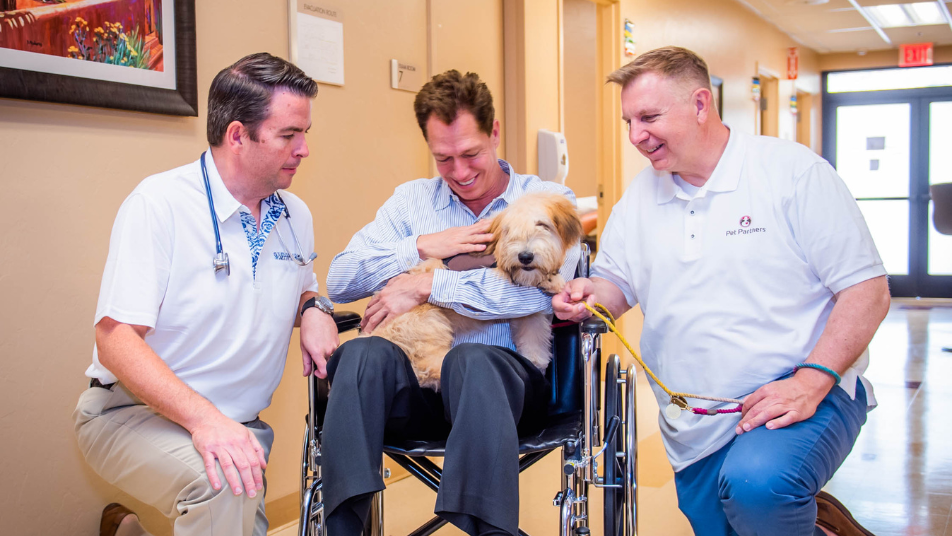
Therapy animal teams often enter busy settings. During one visit, a team may walk through a lobby, enter several rooms, meet facility staff, and interact with many people.
Each part of the visit requires the volunteer to make responsible choices. You may need to follow added precautions in certain areas of a facility or respond when an unexpected health or safety concern occurs.
Infection prevention education can help you make these decisions with greater care and confidence. It can prepare you to support your animal’s health, protect the people receiving visits, follow facility rules, and recognize when a visit should be changed or postponed.
Facilities count on therapy animal volunteers to arrive prepared. Understanding infection prevention shows facility staff that you take health and safety of their community seriously.
The Infection Prevention and Therapy Animal Visits Course includes two learning modules and a 20-question assessment. Together, the modules explore how volunteers can support healthier visits through hygiene, preparation, observation, and responsible decision-making.
You don’t need a medical background to understand why these topics matter. The course connects infection prevention to situations that may occur during therapy animal visits.
By completing the course, you can learn more about how germs may spread during visits, what to consider before entering a facility, and how to recognize when you or your animal should stay home. You will also explore how to respond when an infection prevention concern occurs and how to work with facility staff to support safe visits.
The first module of the course focuses on the importance of infection prevention. You will learn about hygiene best practices, germs that animals may spread, and actions that can help you and your animal stay healthy.
This foundation can help you look at therapy animal visits from a fresh perspective. Imagine that you and your animal will visit several people in different rooms. As you move from one interaction to the next, you will need to think about your hands, visiting supplies, equipment, and the spaces around you. Your choices can affect each person you meet.
The course explores the types of concerns therapy animal volunteers should understand. It also explains why common hygiene choices matter during animal-assisted interventions.
This knowledge can support visits in hospitals, schools, libraries, senior living communities, mental health facilities, workplaces, and community spaces. Each facility may have different rules and needs. Understanding the foundations of infection prevention can help you confidently enter these settings ready to listen, learn, and follow the proper procedures.
Preparation begins before you leave home.
The second module focuses on how volunteers can take a proactive approach to infection prevention. You will learn more about recognizing signs and symptoms of illness in yourself and your animal, and how to respond when an incident occurs.
Therapy animal volunteers should understand what is normal for their pets. Changes in energy, appetite, movement, or behavior may offer important information. The course helps learners think more carefully about changes that could affect visiting plans.
You will also consider your own health. A volunteer who feels unwell may need to delay a visit to protect clients, facility staff, and the therapy animal. These decisions are especially important in settings where people may have weaker immune systems or other health concerns.
Before a visit, you may need to consider whether you feel healthy, whether your animal is behaving normally, and whether an illness in your household might affect the visit. You may also need to review the facility’s current requirements and prepare for the possibility that plans could change.
The course provides more guidance about what to look for and how to make responsible decisions.
Even a well-planned therapy animal visit can include surprises.
A health concern may appear during a visit. A client may become ill, or your animal may come into contact with something unexpected. You might also enter an area in the building that has precautions that weren’t clear before you arrived.
Knowing how to respond can help you stay calm and protect everyone involved.
The Infection Prevention and Therapy Animal Visits Course explores how volunteers should approach incidents and infection prevention concerns. It also reinforces the importance of communicating with facility staff and following Pet Partners’ procedures.
Learning about situations like needing to end a visit early, potential types of incidents, and what to do to keep your animal safe after an incident occurs can make urgent decisions easier to manage during a visit.
Infection prevention also protects the pet by your side.
Your animal depends on you to make choices that support their physical health, comfort, and safety. This includes noticing changes, preparing carefully, and deciding when visiting is not the right choice for that day.
As a Pet Partners volunteers, you are your animal’s best advocate (YAYABA™) throughout each visit. Infection prevention knowledge can strengthen that advocacy by helping you recognize when your pet may need a break, a change in the visiting plan, time to rest at home, or a visit to the veterinarian.
Taking this course can give you a better understanding of how infection prevention connects to your role as your animal’s best advocate.
Facilities have a responsibility to protect the people they serve. Many have detailed requirements for volunteers, visitors, hygiene, and contact with animals.
A volunteer who understands infection prevention will be better prepared to work within those requirements. This may include asking questions before the first visit, following instructions from staff, and changing plans when needed. It also means understanding that policies can vary among facilities.
Your preparation will make staff feel more confident in welcoming your team to their workplace. It shows that you respect their work and understand the responsibilities that come with therapy animal volunteering.
Pet Partners provides education and standards that help prepare volunteers for these relationships. The Infection Prevention and Therapy Animal Visits Course offers another opportunity to build the knowledge that supports safe and professional visits.
The Infection Prevention and Therapy Animal Visits Course can offer value at several points in the therapy animal volunteer journey.
People who are considering therapy animal volunteering can take the course to learn more about the responsibilities involved. It may be especially helpful for people who are interested in visiting health care settings or are deciding whether therapy animal volunteering is right for them.
Current Pet Partners volunteers can also benefit from continued learning. The course may be helpful if you are preparing to visit a new type of facility, returning to visits after a break, or looking for a refresher on illness and infection prevention. It can also help you feel more confident responding when a visit does not go as planned.
Facility staff and volunteer coordinators working with therapy animal teams may also find the course helpful during recruitment and programming to make sure they’re promoting the safest therapy animal visits.
Policies, facilities, and visiting situations can change. Continued education helps everyone stay prepared.
A successful therapy animal visit requires careful observation, preparation, communication, and responsible decision-making.
The Infection Prevention and Therapy Animal Visits Course can help you develop these skills. Through two focused learning modules and a final assessment, you will explore hygiene, health concerns, proactive preparation, and responses to incidents. You will also learn how your choices can support the health of your animals and the people you visit.
This knowledge can help you approach therapy animal visits with greater care, confidence, and professionalism.
Prospective volunteers can purchase the Infection Prevention and Therapy Animal Visits Course to learn more about preparing for safe and health visits.
Current Pet Partners volunteers can log into the Volunteer Center and sign up for the course to refresh their knowledge and prepare for future visits.