
Pet Partners vs. AAAIP: Are You in the Right Place?
Published:
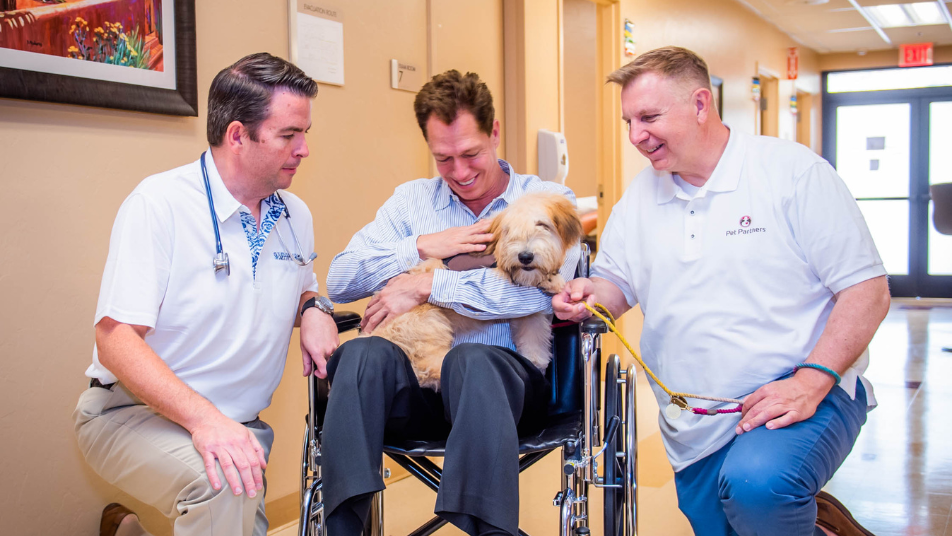
If you know an animal that can make a difference in people’s lives, you may have started to research ways to make that happen. Research might have led you to the term “animal-assisted interventions”: goal-oriented and structured interventions that incorporate animals in health, education, and human service for the purpose of therapeutic gains and improved health and wellness.
As you continue to learn more, it’s likely you’ll see two names come up: Pet Partners and the Association of Animal-Assisted Professionals, also known as AAAIP. Which organization should you choose?
The answer depends on what you want to do.
Pet Partners is the right starting place for people who want to volunteer with their pet as a therapy animal team. AAAIP serves professionals who want to learn how to incorporate animals into their paid work. Both organizations prioritize the safety and well-being of the therapy animal involved in the work.
Some people may find value in both organizations. Understanding each organization’s role can help you take your next step with confidence.
Pet Partners is a national nonprofit organization that prepares and registers volunteer therapy animal teams. A therapy animal team includes one handler (the human volunteer) and one animal working together.
Registered teams may volunteer in hospitals, schools, libraries, senior living communities, airports, workplaces, and many other settings. During these visits, the handler supports their animal and helps create safe, positive interactions with the people they meet.
The Pet Partners Therapy Animal Program is designed for volunteer work. Handlers do not charge for their visits completed in their role as a Pet Partners volunteer.
Pet Partners also evaluates the handler and animal together. A successful visit depends on both members of the team. The animal needs appropriate behavior around strangers and a desire to meet people. The handler needs the skills to guide interactions, notice signs of stress in their pet, and protect the animal’s emotional and physical well-being.
This team-based approach helps prepare volunteers for situations they may face during real visits.
Pet Partners is the right place for you when you want to share your pet with people in your community through volunteer visits.
Some examples are reading with children at a library, visiting patients at a hospital, spending time with residents at a senior living community, or supporting students during a stressful exam week. These are all opportunities available to registered Pet Partners therapy animal teams.
You do not need to be a professional animal trainer to volunteer with your pet, but you should understand how to prepare your pet for therapy animal work. You need to have a strong relationship, understand their behavior, and be willing to learn what safe and effective therapy animal volunteering requires.
Your pet also needs to enjoy the work. A therapy animal should welcome interactions with new people rather than simply tolerate them. Your pet should be reliable, predictable, responsive to your guidance, and able to recover after mild surprises.
Pet Partners always puts animal welfare first. Your role as a handler includes choosing opportunities that fit your animal and ending or changing an interaction when your animal needs more support.
Registering with Pet Partners gives volunteers access to support that extends beyond the initial evaluation.
Pet Partners provides liability insurance for approved volunteer activities. This is important because many facilities require visiting therapy animal teams to show proof of coverage.
Registered volunteers can also access resources, continuing education, and volunteer opportunities. Local Community Partner groups may help teams connect with other volunteers and find ways to serve their communities.
Teams may also explore special initiatives as they gain experience. These include Read With Me™, Animal-Assisted Crisis Response, and other opportunities that meet specific community needs.
Pet Partners staff are available to answer any questions and help volunteers move through the process.
You can also learn how Pet Partners compares with other therapy animal organizations in areas such as education, evaluation, safety standards, and volunteer support.
The Association of Animal-Assisted Intervention Professionals is a professional association for people who incorporate, or plan to incorporate, animals into their work.
AAAIP serves professionals in schools, clinics, offices, and other settings. Its audience includes teachers, school counselors, mental health professionals, social workers, psychologists, rehabilitation specialists, healthcare providers, librarians, attorneys, court professionals, law enforcement officers, and others working in animal-assisted interventions.
These professionals may be planning structured activities tied to goals for a student, patient, client, or other participant. They have responsibilities connected to their own education, job duties, professional ethics, and scope of practice.
AAAIP offers education, resources, professional membership, and opportunities to connect with others in the field. It also offers the AAI Specialist Certification (C-AAIS), a credential for AAI professionals.
A professional can begin learning through AAAIP before choosing or partnering with an animal.
AAAIP may be the right place for you when your main goal is to incorporate a therapy animal into your paid professional work.
A school counselor may want to include a dog in sessions with students. A teacher may be planning activities involving a therapy animal that support classroom goals. A mental health professional may want to include an animal in documented treatment sessions. A hospital administrator may need help creating safe policies for animals in a facility.
In each case, the professional needs more than general volunteer preparation. They need to understand how animal-assisted interventions fit within their professional responsibilities and the needs of the people they serve.
AAAIP provides resources designed for that professional context.
The clearest way to choose between the organizations is to ask yourself one question:
Do I want to volunteer with my pet, or do I want to incorporate an animal into my professional work?
Pet Partners prepares and registers volunteer therapy animal teams. Our registration process includes handler education, an animal health screening, a team evaluation, registration, volunteer insurance, and ongoing support.
AAAIP provides education and professional development for people working in animal-assisted interventions. AAAIP’s resources help professionals build knowledge and make informed decisions within their field.
The two paths between Pet Partners and AAAIP can sometimes connect. A Pet Partners volunteer team may work with a teacher, therapist, or healthcare provider in a structured way. The volunteer handler focuses on the needs and safety of the animal, while the professional focuses on the goals of the student, patient, or client. Or, a professional with AAAIP may decide they want to volunteer with their pet outside of their normal AAI work. The Pet Partners Handler Course and Team Evaluation will introduce them to the ways that volunteer work differs from their AAI practice.
Insurance coverage should match the role you are performing with your animal.
Pet Partners registration includes commercial general liability insurance for approved volunteer activities. This coverage supports registered teams while they complete visits in their role as Pet Partners volunteers. Many facilities require therapy animal teams to provide proof of this type of coverage before visiting.
For more context about volunteer insurance and other program requirements, explore these common therapy animal volunteering myths.
Pet Partners volunteer insurance does not cover paid professional services. A teacher, counselor, therapist, healthcare provider, or other professional who incorporates a therapy animal into their work should obtain insurance designed for that professional role. Depending on the setting and services provided, this may include professional liability coverage, general liability coverage, or coverage related specifically to animal-assisted interventions.
AAAIP gives eligible professionals access to insurance options designed for paid work in animal-assisted interventions. Professionals should review what requirements their employer, facility, licensing board, and insurance provider have to determine which policies and coverage limits apply to their work.
A professional may need both types of coverage if they’re volunteering through Pet Partners and incorporating an animal into paid work. Keeping these roles and their related insurance coverage clearly defined helps protect the professional, the volunteer team, the facility, and the people they serve.
Professionals are welcome to become Pet Partners handlers when they want to volunteer with their animals.
A teacher, counselor, therapist, or healthcare provider may choose to complete the Pet Partners process to gain volunteer handling experience. The Handler Course and team evaluation can help professionals learn more about their animal’s behavior, comfort, preferences, and readiness.
Volunteering can also give teams experience in new environments before considering a more structured role for their animal.
The professional should keep volunteer activities separate from paid services. The right professional education, policies, and insurance are still key before incorporating an animal into professional practice.
Some people have goals that include both volunteer service and paid professional practice.
Like a school counselor who wants to volunteer with their dog at a senior living community while learning how animal-assisted interventions could support students at work. Pet Partners could prepare and register the counselor and their dog for volunteer visits. AAAIP could provide education specifically related to the counselor’s professional role.
Or a therapist may also choose to work with an existing Pet Partners volunteer team. The therapist can plan and direct the intervention, while the volunteer handler supports the therapy animal throughout the session.
This type of partnership allows each person to focus on their area of responsibility.
Choosing the right organization is only one part of the decision. You also need to consider whether therapy animal work is a good fit for your pet.
A strong candidate for becoming a therapy animal enjoys meeting unfamiliar people and can remain comfortable in changing environments. That animal has basic manners, responds to the handler’s guidance, and can recover from mild stress or surprise. When you are ready to take the next step, learning what to expect at a Pet Partners evaluation can help you and your pet prepare.
Health is also important. Therapy animals may visit people who are more likely to become sick from an infection. Animals must meet health, grooming, and diet requirements that protect everyone involved.
Your relationship with your pet matters just as much. You should know how your pet communicates excitement, uncertainty, fatigue, and stress. You should also be ready to make choices based on your pet’s needs, even when that means leaving a visit early or choosing a different setting.
Therapy animal work should be safe and rewarding for both members of the team.
Pet Partners is the best starting place when you want to volunteer with your pet as a therapy animal team. You will receive a clear registration path, preparation for visits, volunteer insurance, and continued support as you serve your community.
AAAIP is designed for professionals who want education and resources related to incorporating animals into their paid work. It can help you build knowledge that fits your profession and the population you serve.
You may also choose both when your goals include volunteer visits and professional animal-assisted interventions.
Ready to begin volunteering with your pet? Start a Pet Partners Volunteer Center account and start your journey toward becoming a registered volunteer therapy animal team.
Planning to incorporate a therapy animal into your professional work? Explore AAAIP membership, education, and professional resources.