
Volunteer With Your Pet: Therapy Animal FAQs
Published:

Maybe your dog loves meeting neighbors. Maybe your cat curls up on the lap of every guest in your home. Maybe your rabbit, bird, or guinea pig has a way of making people smile. If you have ever wanted to volunteer with your pet, Pet Partners can help you take the next step.
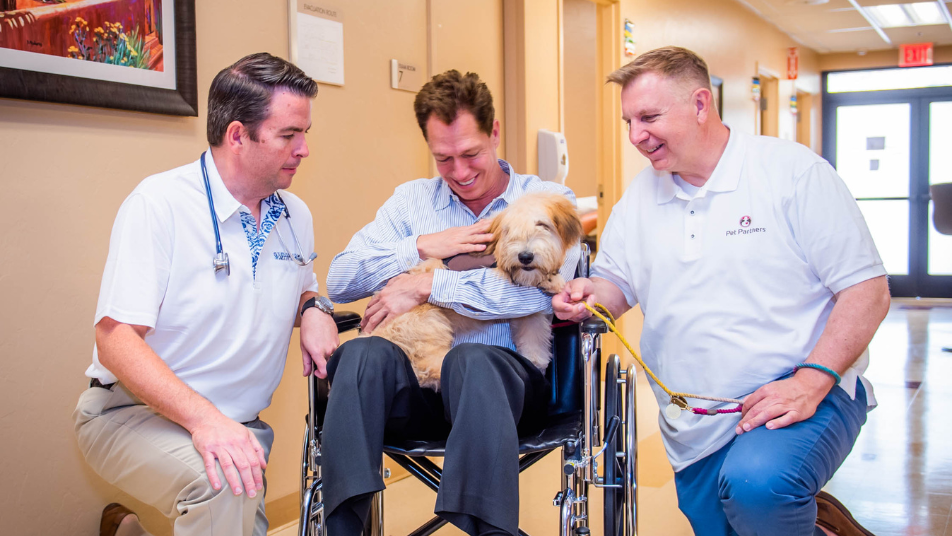
Pet Partners helps people and their pet get ready for safe, happy therapy animal visits. These visits bring comfort and joy to people in places like schools, hospitals, libraries, and senior living communities, to name a few.
The Pet Partners mission is to improve human health and well-being through the human-animal bond. If you are curious about this work, these answers can help you begin.
A therapy animal team is one person and one animal. The person is called a handler. The handler and animal visit together to bring comfort, connection, and joy to others.
Pet Partners registers teams because both of you matter. Your pet’s behavior is important but your role is important, too. You help your animal feel safe and help guide each visit. You also help the people you visit interact with your animal in a gentle and respectful way.
For example, you may show someone where your dog likes to be petted. You may notice when your cat needs a break. You may help your rabbit stay calm in a new room. You may guide your animal through a busy hallway.
A registered therapy animal team works well because of trust. Your pet trusts you. You know your pet. Pet Partners helps both of you get ready for this special volunteer role.
No. Therapy animals, service animals, and emotional support animals have different roles.
Therapy animals visit other people. They may visit schools, hospitals, libraries, senior living communities, workplaces, and events. Their role is to share comfort and connection.
Service animals are trained to do specific tasks for a person with a disability. They have public access rights because they help that person with daily needs.
Emotional support animals give comfort to their owner. They do not have the same role as therapy animals. They also do not have the same public access rights as service animals.
Therapy animals do not have public access rights. A registered therapy animal team may visit only where they are invited and approved to visit.
Pet Partners does not train pets for therapy animal work. We educate you as their handler. The Pet Partners Handler Course teaches you how to support your pet during visits. You will learn about safety, animal well-being, infection control, visit skills, and professional conduct. You will also learn how to read your animal’s body language and help guide each interaction.
Your pet should already have good manners and enjoy meeting new people. Dogs should have basic skills, such as walking politely and responding to cues. Other species should have manners appropriate for that type of animal.
You do not need to be a professional trainer to begin. Many Pet Partners volunteers are everyday pet owners with a big heart for animals and people. What matters most is that you are ready to learn, prepare, and put your animal’s well-being first.
Pet Partners registers many species. These include dogs, cats, equines, rabbits, guinea pigs, llamas and alpacas, birds, miniature pigs, and rats.
Therapy animal visits are not limited to dogs. Many animals can make a real difference when they are healthy, calm, friendly, and part of a prepared team.
We include these nine species because we have extensive research showing that each one can make for successful therapy animals. To bring a new species into our Therapy Animal Program, we need this kind research to create our team evaluation standards to appropriately determine if the animal is suitable for this type of volunteer work.
A good therapy animal enjoys meeting new people. Your pet should seem comfortable and happy during friendly visits.
A therapy animal should stay calm in new places. Visits may include new sounds, new smells, medical equipment, wheelchairs, elevators, children, or busy halls. Your animal does not need to be perfect but they should be able to settle after something new happens.
Your animal should have good manners for their species. For dogs, this includes walking calmly and listening to handler cues. For other species, it may mean being calm while carried, touched, or placed near someone.
Your animal should also be safe around other animals they may pass during visits. They do not need to greet every animal, but generally staying calm and responsive to your cues is critical.
Most of all, you and your pet should have a strong bond. They should look to you for support. You should know when your animal is happy, tired, unsure, or ready for a break.
Pet Partners wants visits to be good for everyone. That includes the people being visited, the handler, and the animal.
All therapy animals have an Animal Health Screening Form completed by a veterinarian to join Pet Partners. This form helps confirm that your animal is healthy enough for therapy animal visits.
Health rules help protect your animal. They also help protect the people you visit and other animals.
This matters because some therapy animal teams visit people who are medically fragile. Some people may have weaker immune systems. Pet Partners takes this responsibility seriously.
Some animal health conditions or medications may affect whether they can visit. That does not mean every health condition prevents an animal from taking part. Many animals with health needs can still be wonderful therapy animals when visits are safe and right for them.
The key question is simple: Can your animal enjoy visits without added stress, pain, or risk? Your veterinarian and Pet Partners resources can help you understand what is best for your animal.
There are a few costs to join the Therapy Animal Program, such as for the online Handler Course.
Discounts may be available in some cases, such as for more than one household member. Because fees can change, check the Pet Partners Fees page for the most current details.
These fees support the education, resources, review process, and standards that help teams get ready. Pet Partners’ process is designed to help you feel prepared and confident before your first visit.
The team evaluation is where Pet Partners looks at how you and your animal work together.
The evaluation includes moments like the ones you may see during real therapy animal visits. Your animal may greet a friendly person, accept petting, move through a group, respond to a distraction, or be near another animal. The core exercises are consistent for all animals, but a few vary depending on your animal’s species.
Your role is to guide, support, and advocate for your animal. You may give cues, offer kind praise, create space, or explain how someone should greet and interact with your animal.
Your animal should show safe, calm, and friendly behavior. The evaluation helps show whether your team is ready to visit.
Once therapy animal teams are fully registered with Pet Partners, acceptance letter in hand, they may visit many types of places. These may include schools, libraries, hospitals, assisted living facilities, workplaces, and community events.
Active, registered teams can search for volunteer opportunities in the Volunteer Center. Teams may also contact local facilities directly. A volunteer coordinator, activities director, school staff member, or events manager may be a good place to start.
The best visit setting depends on your team. Some teams are best suited for quiet one-on-one visits with older adults. Some enjoy reading programs with children. Others may do well at busy events or workplace well-being visits.
As a handler, you choose visits that fit you and your pet’s comfort, skills, and joy.
The path to volunteer with your pet through Pet Partners is clear.
First, you will create a Volunteer Center account. This gives you access to the tools and resources you need.
Next, you’ll complete the Pet Partners Handler Course. This course helps you learn how to make therapy animal visits safe and positive.
You will also ask your veterinarian to complete the Animal Health Screening Form. This helps confirm that your animal is healthy enough to take part.
After that, you and your animal complete the team evaluation. This is where Pet Partners looks at how you work together.
Then you submit your Pet Partners registration materials and payment. Once you are approved, you and your animal can begin visiting as a registered therapy animal team.
Pet Partners will help guide you through the process with care, clear steps, and trusted standards. You and your animal can move forward with confidence as you learn what it means to become a registered therapy animal team.
When you volunteer with your pet, you share the human-animal bond with people who may need comfort, joy, and connection. And your journey can start today.
Have more questions? Join one of our free optional webinars to get the answers you need.